 ®
®
RARE GRAPE VARIETAL RESOURCE
Lambrusco del Casetta (Casetta, Foja Tonda) RARE GRAPE red
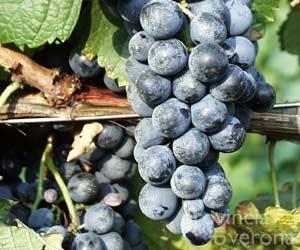
History: Casetta is incredibly rare, nearly extinct, and unrelated to the famous sparkling Lambrusco varieties of Emilia-Romagna. Only a handful of specific producers cultivate it.
The variety has been most probably growing here in the Middle Ages, and it was certainly known in the late-18th Century when Trentino and Alto-Adige was annexed into the Austro-Hungarian Empire. Despite this long history, the variety has only started to attract the attentions of modern winemakers in the last decade or so.
The Casetta grape are particularly long-lived vines, which is why it is not uncommon to find productive plants dating back to 70 years ago. In fact, until the 1950s, this vine was among the most cultivated in the Trentino municipalities of Ala and Mori. Later, it was largely abandoned both for commercial reasons and for its vulnerability to grey mold (Botrytis cinerea) which resulted, temporarily, in it being removed from the list of authorized grape varieties
The Edmund Mach Foundation and Albino Armani’s winery are the undisputed champions of the Casetta grape. In the 1980s, Albino Armani spearheaded the revival of the variety to save it from extinction. Of the estimated 35 total acres of Casetta left in the entire world, Armani owns and cultivates roughly 30 acres (12 hectares). A few other tiny, historic family estates in the Adige Valley (in the municipalities of Ala in Trentino and Dolcé in the province of Verona.) keep minuscule plots of it alive
This vine derives from the domestication of Vitis vinifera silvestris, a wild grape variety created from a spontaneous crossing. This red grape variety is also known as the round-leaf Lambrusco but has nothing in common with the large families of Lambrusco grapes. Its appearance, characterized by a round leaf, hence “foja tonda”; was trademarked in the local dialect name by Albani Armino.
The skin is usually thin and is quite resistant to the cold, although it is very sensitive to winter frosts. It adapts well at heights that do not exceed four hundred meters in altitude. The harvest at the end of September is followed by the classic red wine-making process and it is bottled and aged for at least one year.
Officially registered in the National Catalogue of Vine Varieties since 2002, wines made from Casetta tend towards the rustic and angular. The few tasting notes published for this wine indicate aromas like black cherries with tobacco and sweet spices such as cinnamon and nutmeg.
Due to the scarce availability of grafted cuttings on the market, the Casetta grape is still reproduced today by branching, burying the branch of a nearby vine.
Sources: (Courtesy of Slow Food Foundation for Biodiversity – Ark of Taste); (https://www.fondazioneslowfood.com/en/ark-of-taste-slow-food/casetta-grape/)l (https://www.wine-searcher.com/grape-1990-casetta) & (https://www.quattrocalici.it/ )
VIVC: https://www.vivc.de/index.php?r=passport%2Fview&id=14977
Parentage: Unknown
Tasting notes: The Casetta grape has very interesting qualitative potential with both fine and intense sensory attributes and is characterized by fruity and spicy notes. As a wine, Casetta has an intense ruby red color. The smell has fruity notes of ripe plum and blackberry, with a slightly vegetal background and, to finish, a spicy note of black pepper.
On the palette it is structured with soft and persistent tannic qualities. In local traditions it has always been considered an ageing wine to be served on great, festive occasions. It goes well with game meats, red meats, cheeses and main dishes.
Food pairings: Perfect when paired with Trentino cuisine: dumplings with melted butter, stewed meats, charcuterie boards, mountain (rich) cheeses, pizza and pasta, spicy and fried foods.
Production areas: In 2006 it was awarded the recognition of Valdadige Terra dei Forti DOC, from which some types of wine with a designation of origin can be produced with 100% Casetta grapes. Casetta is used almost exclusively to make IGT wines
Producers: https://www.autoctovino.com/grape/lambrusco-del-casetta-casetta-foja-tonda/
(Photo and text source: https://www.wine-searcher.com/grape)
Help us populate this website. Whatever verifiable information you could provide re: this varietal or others (story pertaining to the varietal, description, producer, importer etc...) would be appreciated. See Contact page or email please
Aiutateci a popolare questo sito. Ogni informazione verificabile che potrete fornire su queste o altre varietà (storia della varietà, descrizione, produttore, importatore, etc…) sarà molto gradita. Per questo potete indirizzare le informazioni utilizzando la sezione Contatti o l' email. Grazie
 Countries grown:
Italy
Countries grown:
Italy