 ®
®
RARE GRAPE VARIETAL RESOURCE
Cornalin d'Aoste (Humagne Rouge) RARE GRAPE red
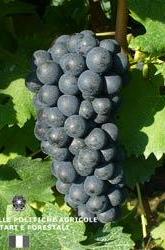
History: First noted in 1838, Cornalin is an old varietal from the Val d’Aosta that almost disappeared in the 20th century before regaining a healthy level of interest at the outset of the 21st cent.
Over the centuries, the beloved Cornalin has endured various ups and downs, witnessing a worrying decline in its production, before being revalued for its undoubted originality and its ability to produce wines of extraordinary quality.
Referred to as Humagne Rouge in Valais, Switzerland since 1999, it is a natural occurring cross of Petit Rouge and, it is believed, Mayolet.
Cornalin, a native grape variety genetically very close and morphologically very similar to Petit Rouge, is distinguished from the latter by its lighter-colored shoots and usually looser, smaller clusters. In Valais, though referred to as Humagne Rouge, it should not be confused with the Swiss grape variety also called Cornalin, to which it is closely related.
Cornalin stands out from other wines for its extraordinary aromatic and structural intensity. This regal wine displays a ruby red color that shines in the glass, while the nose is seduced by a rich bouquet of berries, spices, and mineral notes, a true tribute to the complex composition of the Alpine soil.
At the first sip, Cornalin reveals all its power. It's a robust, structured wine with firm tannins that soften over the years, offering an unparalleled tasting experience. Despite its intensity, Cornalin maintains remarkable balance, supported by a vibrant freshness that makes every sip a pleasure.
Officially registered in the National Catalogue of Vine Varieties since 2007, the wines produced exhibit very marked differences depending on the vineyard's microclimate. Generally, it produces red wines with a medium-intense color. On the nose, spicy, vegetal notes, particularly pepper and licorice root, stand out, which, with long aging, give way to fruity notes of Morello cherry and plum. On the palate, it is modestly acidic with a sharp tannic component, especially in young wines.
Cornalin vineyards, however, require careful care and rigorous grape selection, as this variety is particularly susceptible to various vine diseases.
(Courtesy of: https://www.vinivalledaosta.com/vini/cornalin), (https://winedharma.com/vitigni/cornalin-vitigno-italiano-caratteristiche-vino-storia-e-zone-di-produzione/) & José Vouillamoz
VIVC: https://www.vivc.de/index.php?r=passport%2Fview&id=2838
Parentage: Rouge du Pays & Mayolet?
Tasting notes: Cornalin d’Aosta wines have intense, good persistence with hints of mountain herbs. Spicy notes of pepper and licorice root stand out on the nose.
On the palate, it is a refreshing dry wine with delicate acidity which complements the velvety notes on the palate ending with a soft, tannic finish.
Food pairings: When it comes to food pairing, Cornalin, with its robust structure and rich, intense flavors, is the ideal accompaniment to red meat dishes, game and mature cheeses. Imagine enjoying a plate of Valdostan carbonada or a Valais cheese platter alongside a glass of this sumptuous red wine. Alternatively, pair it with BBQ classics like pulled pork, brisket or beef ribs.
Production areas: Valle d’Aosta DOC Cornalin
Producers: https://www.autoctovino.com/grape/cornalin-daoste-humagne-rouge/
Help us populate this website. Whatever verifiable information you could provide re: this varietal or others (story pertaining to the varietal, description, producer, importer etc...) would be appreciated. See Contact page or email please
Aiutateci a popolare questo sito. Ogni informazione verificabile che potrete fornire su queste o altre varietà (storia della varietà, descrizione, produttore, importatore, etc…) sarà molto gradita. Per questo potete indirizzare le informazioni utilizzando la sezione Contatti o l' email. Grazie
 Countries grown:
Germany,
Italy,
Spain,
Switzerland
Countries grown:
Germany,
Italy,
Spain,
Switzerland